Exclusion
Rodent Proofing in Walnut Creek
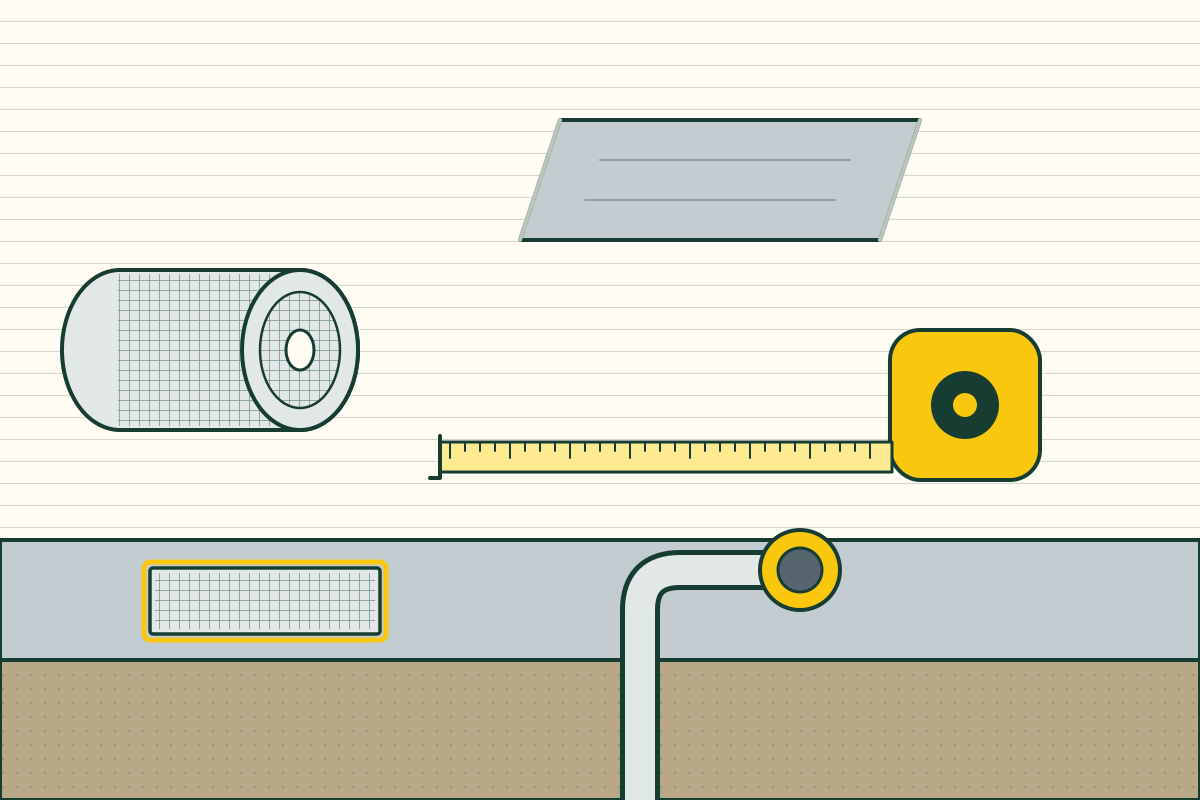
Rodent proofing (exclusion) means finding and sealing every opening a rat or mouse can use, then trapping the ones already inside. UC IPM advises sealing all holes larger than 1/4 inch, using heavy metal mesh or sheet metal rather than foam or caulk. Expect roughly $500–$3,000+ for a full job (California pricing guide, 2026).
The checklist
Entry points a proofing job should cover
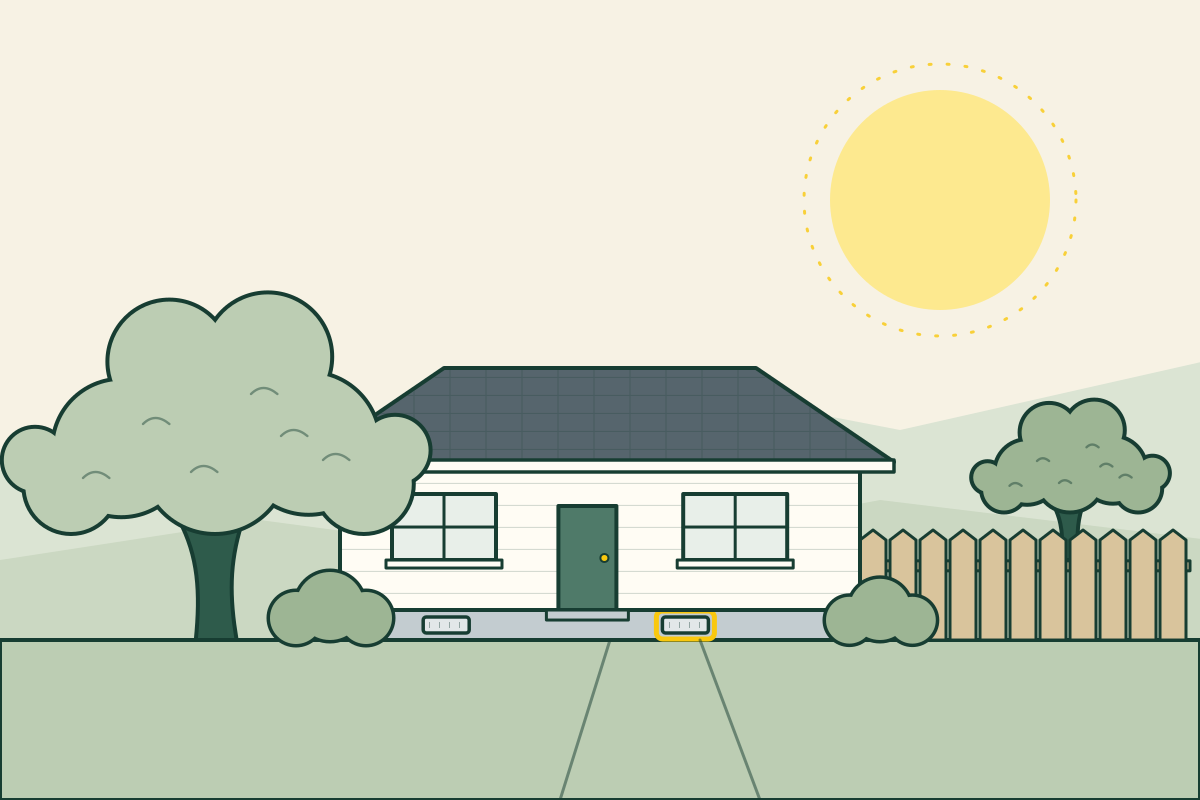
Every house is different, but in Walnut Creek, Lafayette, Orinda and Danville the same six spots come up again and again.
Roof and gable vents
Torn or rusted vent screens let roof rats straight into the attic. Re-screen with heavy metal mesh, not window screen.
Attic gaps at the eaves
Where the roof meets the wall, gaps behind gutters and fascia are a classic roof-rat door. Close them with sheet metal or mesh.
Garage door seals
A worn bottom seal or bent corner leaves a gap mice and rats can squeeze through. Replace the seal and the side weatherstrip.
Crawl-space vents
Foundation vents on 1960s and 1970s homes often have rusted or missing screens. Re-screen them; keep airflow open.
Plumbing penetrations
Gaps around pipes, hose bibs and drain lines where they pass through walls and floors. Pack and cover with metal, then seal.
AC line sets
The refrigerant lines to the outdoor unit usually enter through an oversized hole. Close it with a metal cover and sealant.
Materials
What rodents can’t chew through
Materials decide whether proofing lasts. UC IPM is specific about what works.
| Material | Where it goes | Notes |
|---|---|---|
| Galvanized mesh (UC IPM names 18-gauge or 16-gauge, 1/2-inch mesh) | Foundation and crawl-space vents, gable and roof vents, larger gaps | Keeps airflow. Never use lightweight chicken wire. |
| Sheet metal | Roof-wall gaps, door and window edges, gnawed corners | Shaped to the gap and fastened. |
| Hardware cloth and metal collars | Pipe, hose-bib and line-set penetrations | Packed, covered with metal, then sealed. |
| Door sweeps and garage bottom seals | Garage doors, side doors | Worn seals are a common mouse entry. |
| Foam, caulk, plastic or wood alone | Not a stand-alone fix | UC IPM lists these as materials rats can chew through. |
House by house
Where proofing gets complicated
Roof-wall gaps and eaves
Roof rats climb. The junction where the roof meets a wall, gaps behind gutters, and the spaces where rafters end at the eave are typical attic doors. Closing them often means ladder or roof work.
Crawl-space vents
Raised-floor homes from the 1960s and 1970s have foundation vents whose screens rust out. Re-screening keeps the crawl space ventilated while keeping rodents out. A crawl-space entry hatch needs a tight cover too.
Garage doors
The bottom seal and the corners of a roll-up door wear quickly. A new seal plus side weatherstrip is one of the cheapest fixes on the list.
Chimneys and roof penetrations
Open chimney flues, plumbing vents and roof jacks can all be entry points; a chimney cap or screened vent cover closes them.
Warranty
Questions to ask about the guarantee
- How long does the warranty last, and does it cover the whole house or only the sealed points?
- If rodents get back in, are return visits and re-sealing included at no extra charge?
- Does the warranty require a yearly inspection or a service plan to stay valid?
- What voids it: new construction, roof work, a solar install, a pest-damaged vent?
- Is it written into the contract with the list of sealed points and materials?
Questions
Frequently asked
What is the most effective rodent deterrent?
Sealing the house. Rats and mice keep coming as long as there is a way in. Closing every gap over 1/4 inch with metal, trimming tree limbs back from the roof and thinning ivy beat sprays and gadgets.
Is spray foam enough to seal rat holes?
Not on its own. UC IPM lists foam, plastic, wood and caulk as materials rats can chew through. Foam or sealant can fill behind metal mesh or sheet metal, but the metal does the work.
Is rodent-resistant insulation worth it?
Insulation is not a substitute for sealing. If attic insulation has to be replaced after an infestation, ask what product is proposed and what claims the manufacturer makes, and get the sealing done first. See attic cleanup.
How much does rodent proofing cost?
One California guide puts structural exclusion at $500–$3,000+; a Bay Area guide from the same publisher puts full-home exclusion at $2,500–$6,000+ for complex homes. Details are on the cost page.
Will sealing block my crawl-space ventilation?
It shouldn’t. Vents are re-screened with metal mesh, which keeps air moving while keeping rodents out.
Next step
Get the house looked at
Call for the quickest answer, or send the form and expect a call back to set up an inspection and a written quote.
- Entry points found and listed
- Trapping, sealing and cleanup priced separately
- Warranty terms in writing